CUSTOM CUFFLINKS & TIE CLIPS

The third button rule.

A tie clip belongs between the third and fourth shirt buttons. It is the one rule every man is taught and almost nobody follows. Both of these objects live inside rules like that — small enough that only precision shows, formal enough that precision is the whole point.

16 mm of visible metal

Everything outside that 16 mm is engineering the wearer never sees but always feels: the spring, the shaft length, the plating on the underside of the face.

  • 100 pairsMOQ per design
  • 14–18 mmTypical face size
  • 7–10 daysPrecision sampling

I · SPECIFICATIONS

Measured in single millimetres.

There is no margin for a soft relief or a loose post at this scale. These are the numbers that decide whether the pair reads as jewellery or as a promotional item.

16 mm
The Working Face Size
PAIR
MATCHED
01
MOQ
100 pairs per design; mixed designs per order accepted
02
Cufflink Face
14–18 mm; oval, round or square, flat or domed
03
Tie Clip Length
45–55 mm; face width 6–8 mm
04
Material
Brass, zinc alloy, stainless steel
05
Craft
Die-struck, die-cast, laser engraving, hard or soft enamel
06
Plating
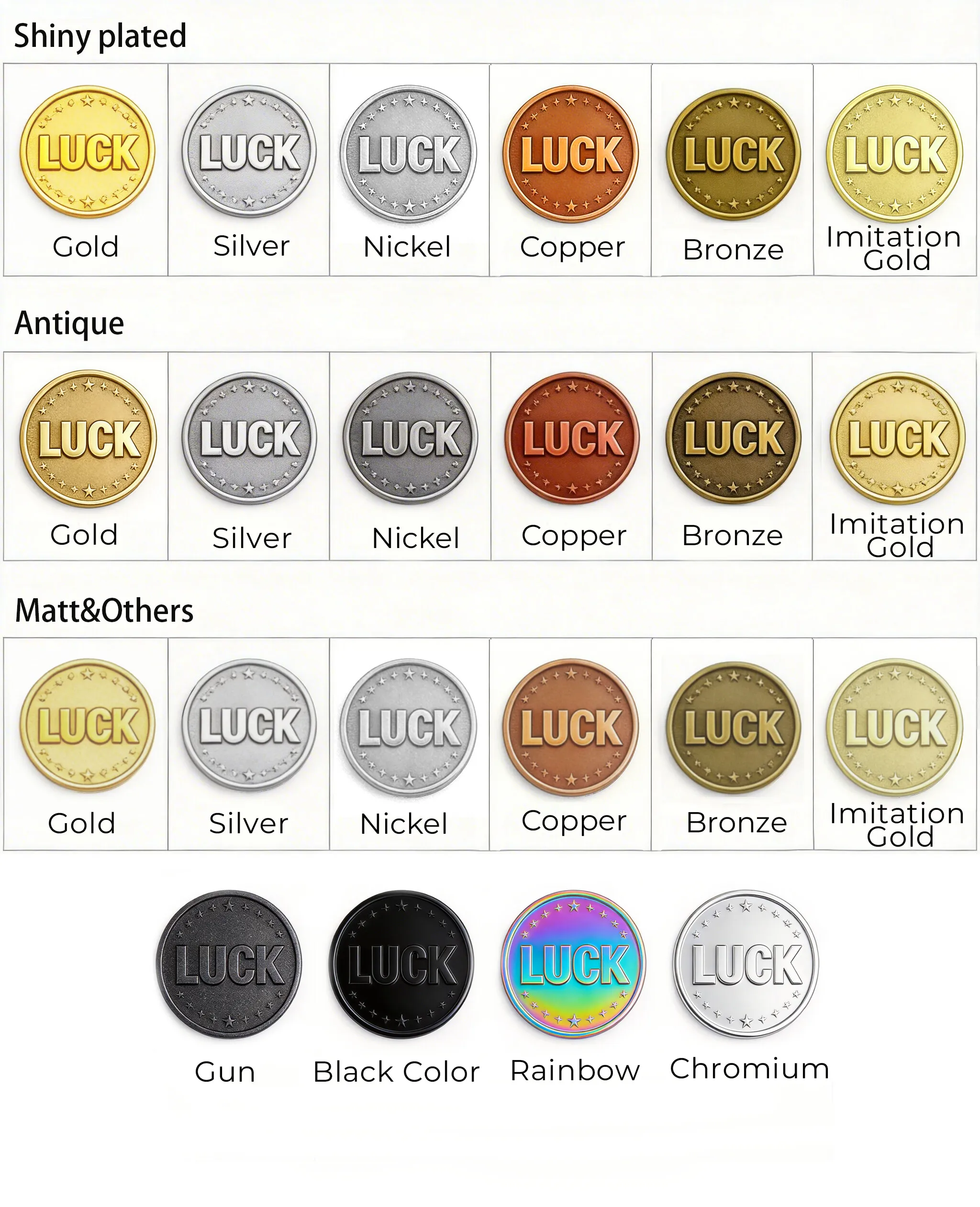
Gold, rose gold, rhodium, black nickel, antique finishes
07
Closing
Swivel post, bullet back, fixed toggle, chain fitting
08
Tie Clip Grip
Spring bar tuned for silk; no snag on twill or knitted ties
09
QC
Pair mirroring, spring tension and plating adhesion checked 100%

II · CUFFLINKS & TIE CLIPS

Two objects, two engineering problems.

They are sold together because they are worn together, not because they are the same product. One is judged by the eye and the other by the hand, and conflating the two is how matched sets end up mismatched.

ACufflink

The face is the visible half, but the mechanism is what people actually live with. A cufflink with a weak spring turns a French cuff into a ten-second fumble at the beginning and end of every meeting — and a cufflink that grips too hard takes skin with it.

Judged by
The eye, twice — across the room and at the wrist
Tolerance
Shaft length must clear a folded cuff, 8–11 mm
Failure mode
Spring weakens; face and shaft separate
Repairable
Return to stock, not to repair
  • Face 14–18 mm
  • Pair-matched
  • Swivel post standard

BTie Clip

A tie clip is a clamp that presses against fabric all day. Every clip looks identical on a table — the difference shows up after a month of use, when an over-tensioned spring has left a permanent crease across the tie.

Judged by
The hand — how it opens, how it lets go
Tolerance
Spring travel 2–3 mm with soft landing on silk
Failure mode
Over-tension creases fabric; loose spring slides
Repairable
Same plating as the cufflink, so sets stay matched
  • Length 45–55 mm
  • Face up to 30 mm
  • Silk-tuned spring

How the two are combined

01

Cufflink only

The safest corporate gift. One decision, one tool, no fit risk.

1 pairClient gifting
02

Cufflink + tie clip

The classic set. Both pieces share plating so they read as one object.

3 pcsBoard & wedding
03

Set + lapel pin

Three pieces for full formalwear, boxed in a single foam tray.

4 pcsAwards & heritage
04

Set + studs

Adds a dress-shirt pairing for black tie. Higher unit cost, highest perceived value.

9 pcsMilestone events

III · CLOSING & FIT

What the wearer feels every morning.

Almost all returns in this category come from the mechanism, not the artwork. Both of these objects are clamped, clipped or locked against fabric twice a day, and the difference only shows after a month.

Swivel Post

Standard

The default for a reason. The rear bar rotates through 90° and locks across the cuff fold, so the face can never slide forward. Most French cuffs are cut with a gap that suits a 10–11 mm post.

Best forAlmost every French-cuff shirt
On the cuffTwo seconds per cuff

Bullet Back

Most secure

A cylindrical toggle sits in line with the shaft and turns to lock. It holds the firmest of any mechanism and feels the most solid in the hand, but it is slower to put on and less forgiving on a tight cuff gap.

Best forHeavy faces and daily wear
On the cuffThree seconds per cuff

Fixed Toggle

Most affordable

A single fixed T-bar that you angle through the cuff. Cheapest to manufacture and the least likely to break, because there is no pivot — but it only fits cuffs with a wide enough gap, and it feels less refined.

Best forHigh-volume promo programs
On the cuffFastest, but fit-dependent

Chain Fitting

Most formal

A short chain links the face to a bar rather than a rigid shaft. Historically the dressiest option and the only one that tolerates an unusual cuff gap, but it hangs loose and is more prone to tangling.

Best forBlack tie and vintage cuffs
On the cuffSlowest to fasten

Tie clip position

Four placements, drawn to scale on a shirt front. Only one of them keeps the tie and the shirt moving as a single piece of fabric.

Correct

Between the third and fourth buttons

Level with the sternum, anchored to the shirt placket so the tie and shirt move together. The tie stays flat and the clip stays hidden under the jacket.

Risky

Above the third button

Sits in the narrow part of the tie where the fabric is already springing away from the shirt. The clip only holds one of the two layers, so the tie still swings.

Risky

Below the fourth button

Grips the wide end where the tie is heaviest. It pulls the fabric taut across the belly and leaves a visible crease that does not press out.

Fails

No clip, jacket off

The tie lifts away from the shirt the moment you move. Not a manufacturing problem, but the reason most corporate tie clips end up in a drawer.

Face size, drawn to scale

The most common artwork problem is a logo approved for a 30 mm patch and then applied to a 14 mm face. These are actual relative sizes.

12 mm

12 mm — a ring or a headshot only. Detail disappears.

14 mm

14 mm — the practical minimum for a real logo.

16 mm

16 mm — the commonest face, reads at handshake distance.

18 mm

18 mm — largest before it stops looking like a cufflink.

IV · CRAFT AT 16 MM

Two decisions decide the object.

How the relief is formed and how it is plated. Everything else — enamel, engraving, finish — sits on top of those two.

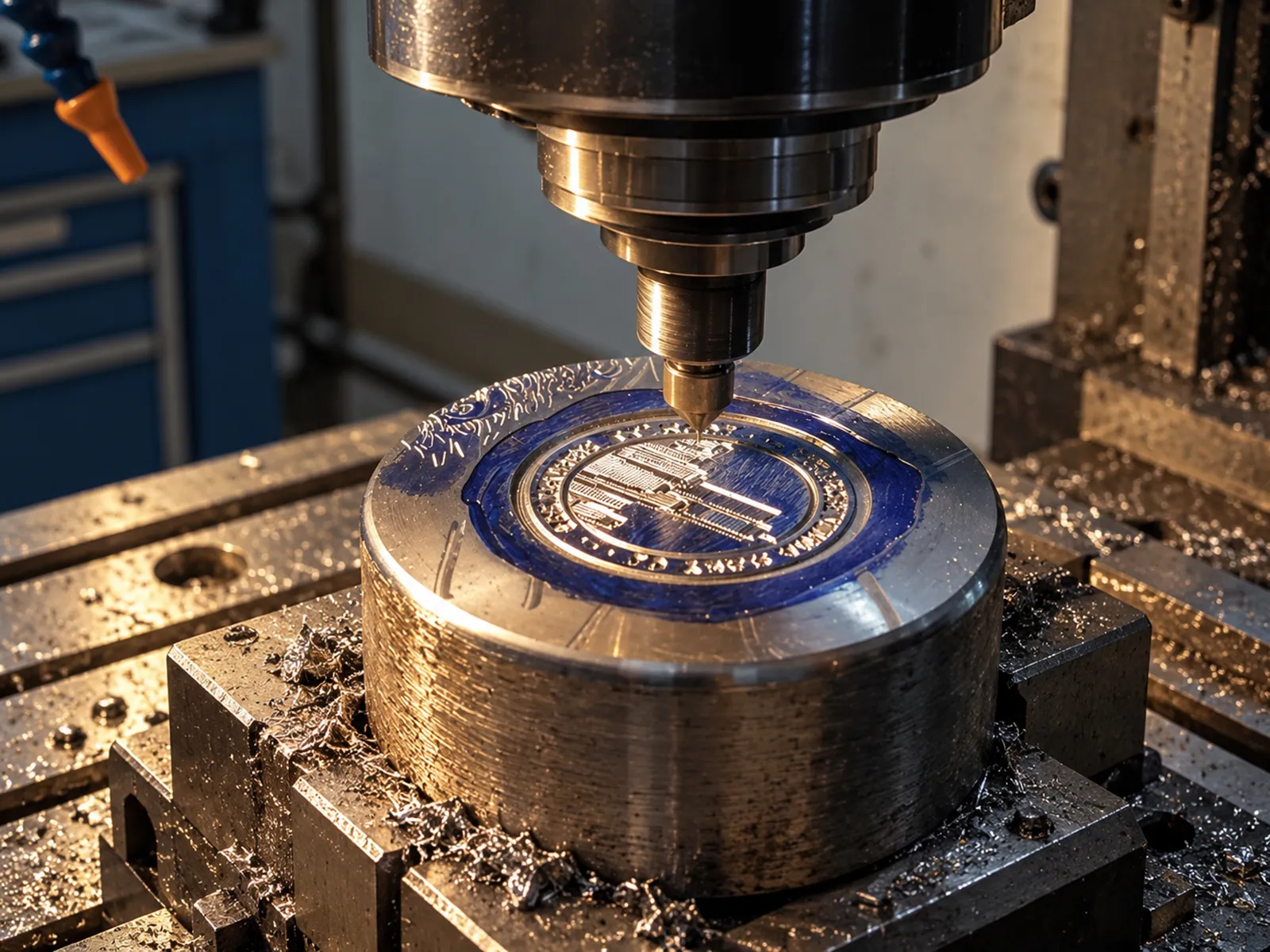
Die-struck cufflink face with fine logo relief01

Die-Struck Micro-Relief

The face is struck under high pressure rather than cast, so the relief edge stays vertical instead of sloping. At 16 mm that edge is what separates a crisp logo from a soft blob — and it is settled in artwork, not in production.

Lines below roughly 0.15 mm will fill in or crumble. We flag them at proof stage.

Plating finish options for custom cufflinks02

Plating That Has to Wear Evenly

The face wears against a jacket cuff hundreds of times a year. Rhodium and 18K gold over brass hold their tone longest; the high points of the relief rub first, which is exactly why relief depth and plating thickness have to be planned together.

Polished for formal shine, brushed for matte. Dual-tone is possible but lengthens lead time.

Hard or soft enamel

Both use the same die. The difference is whether the colour is left recessed or ground flat and polished back to the metal — which is the difference between a lapel-pin finish and a jewellery finish.

Hard enamel

Ground flat and polished. The surface is a single plane, so the metal and the colour catch light together. Slower, dearer, and the only version that feels like a cufflink.

  • Flush, glass-like surface
  • Resists scratching at the cell edges
  • Two to three extra polishing passes

Soft enamel

Colour sits proud of the metal in each recess. Cheaper and faster, and the raised metal lines read well on large shapes — but at 16 mm it looks like promotional merchandise.

  • Undulating, textured surface
  • Faster lead time, lower unit cost
  • Best on 18 mm faces and larger shapes
Want the technical walkthrough?Die-striking versus die-casting, plating comparisons, hard versus soft enamel, and how to prepare artwork for a 16 mm face — our craft guides cover each technique with reference photos you can hand to a designer.
Explore Craft Guides

V · PRESENTATION

The pair has to arrive as a pair.

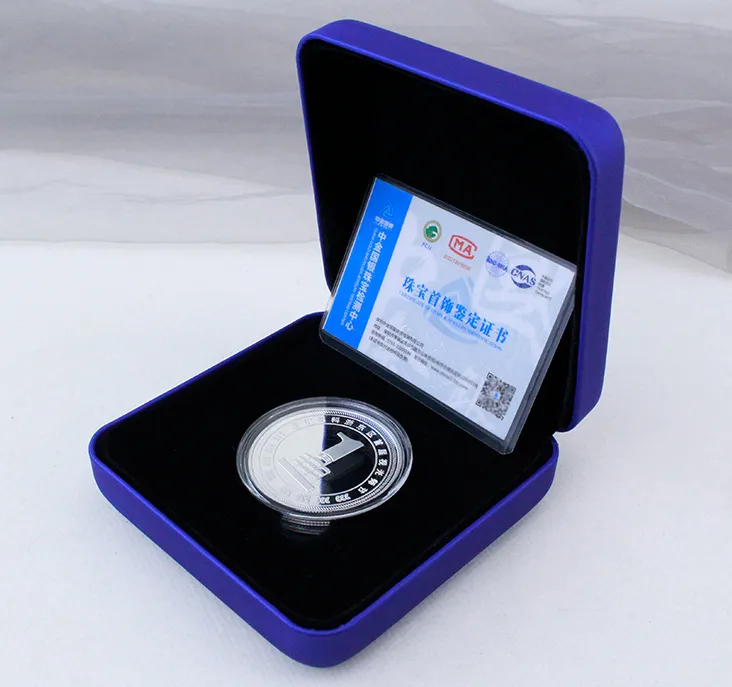
In this category the box is not packaging, it is the proof. A foam tray that holds both shafts upright is what tells the recipient the two pieces were considered together.

Rigid presentation box with a die-cut insert for a cufflink pair

Foam cut to the actual shaft length, not a stock insert.

01

Foam tray in rigid boxStandard

The workhorse. Die-cut foam holds the shafts upright so the faces present flat when the lid lifts.

02

Velvet pouchVolume

Lower cost, softer feel, weaker presentation. Often chosen for volume programs where packaging is secondary.

03

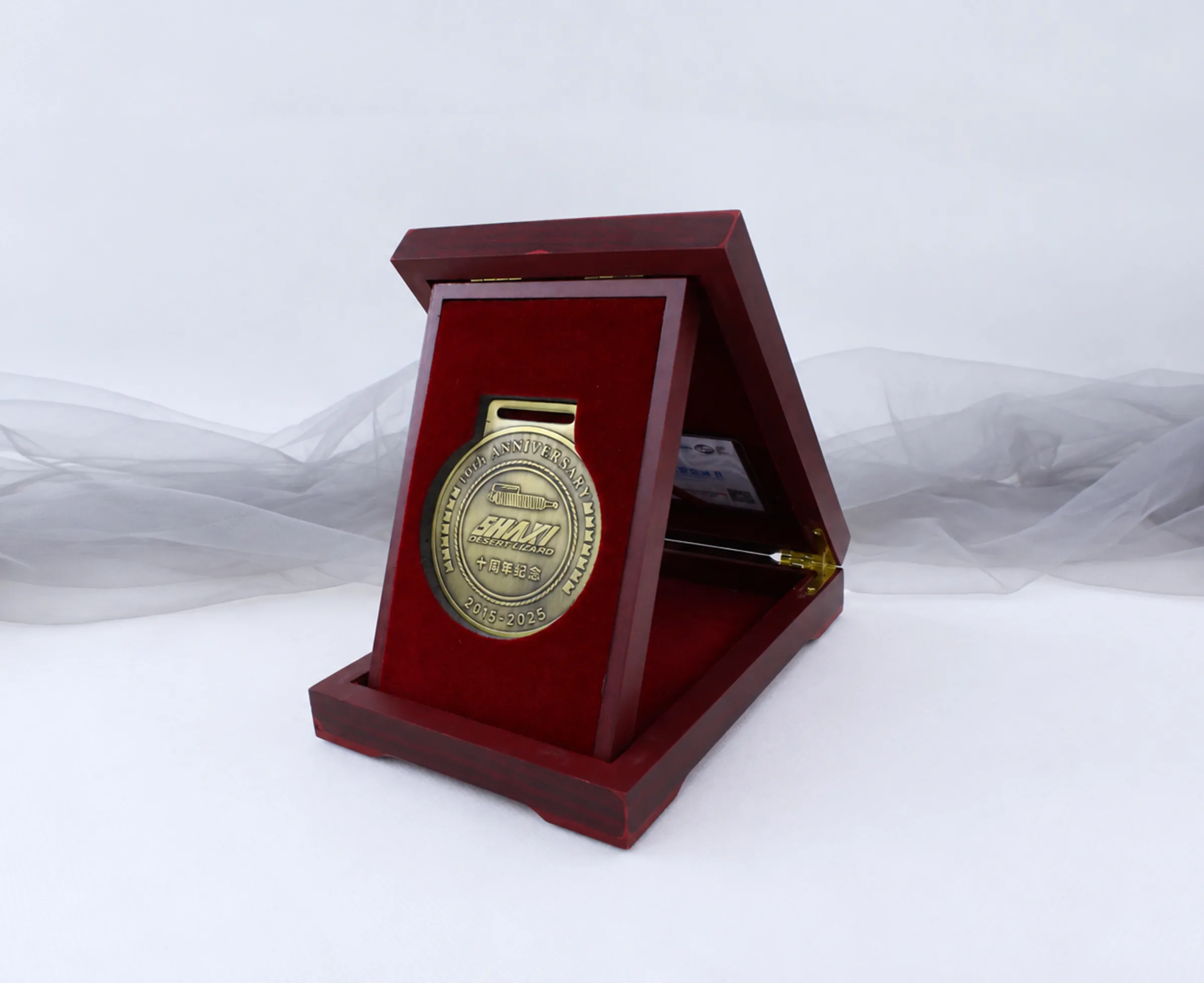
Wooden boxPremium

For retention and retirement gifts where the box is expected to outlive the occasion.

04

Numbered edition cardAdd-on

A printed card with a serial inside the lid. Cheap to add and it converts a set into a collectible.

VI · APPLICATIONS

Quiet rooms only.

Cufflinks work where a branded giveaway would be an embarrassment. That narrows the occasions and raises the bar on finish.

01

Executive & Board Gifts

The category where a cufflink set is expected to feel like a keepsake rather than merchandise.

Handshake
02

Weddings & Groomsmen

Matched sets with individual engraving. Volume is small but personalization per unit is high.

Ceremony
03

Long-Service & Retirement

Occasions where the gift has to outlast the job title. Engraved reverse faces are the usual request.

Departure
04

Aviation & Regimental

Squadron and regimental sets, crew gifts, and heritage-brand anniversary pieces.

Squadron
05

Brand & Collector Editions

Numbered drops for retail and fan audiences, boxed and carded as a limited run.

Retail
06

Conferences & Speaker Gifts

Standardized sets given at scale, where photography and unboxing matter more than personalization.

Stage

VII · PRODUCTION & QC

Artwork to boxed pair.

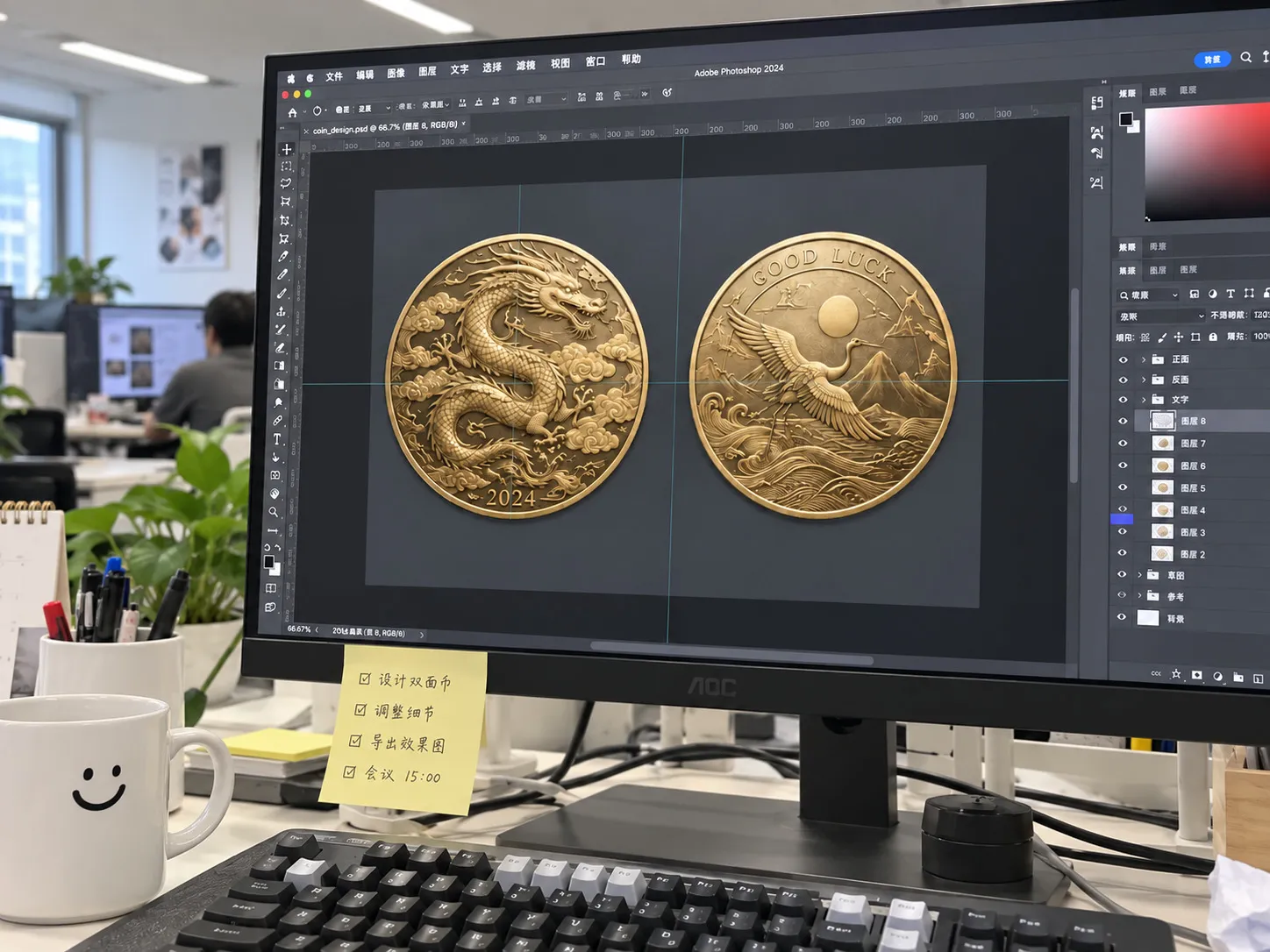
Six stages, with the artwork review doing more work than usual — at 16 mm every correction after tooling is exponentially more expensive than a correction on paper.

01
Artwork and design review for a custom metal product

Design

We review your artwork, dimensions, details, colors, and finishing requirements.

02
Custom metal mold prepared for production

Mold

A custom mold is created from the approved design.

03
Metal forming process for custom metal products

Forming

Die-casting or stamping creates the metal body and relief details.

04
Metal plating process for custom metal products

Plating

The product receives the selected gold, silver, bronze, antique, or other metal finish.

05
Coloring, polishing, finishing, and quality inspection of custom metal products

Finishing & Inspection

Enamel, printing, polishing, final detailing, and quality checks are completed.

06
Finished custom metal products being packed for shipment

Packing

Finished products are packed according to project requirements and prepared for shipment.

VIII · FAQ

Frequently asked questions.

Still deciding? Send the mark at actual size and we will tell you which details hold at 16 mm before any tool is cut.

Are cufflinks always sold in pairs?

Yes — they ship as a matched pair. Left and right are compared side by side for plating tone and relief orientation before boxing, because a mismatched pair is the most common complaint in this category and it cannot be fixed once it leaves the factory.

Which closing mechanism should we choose?

Swivel post for almost everything, bullet back if you want the most secure hold and do not mind a slower fastening, fixed toggle when unit cost is the deciding factor. Chain fittings are only worth it for vintage or unusually cut cuffs.

How small can the logo detail go?

At a 14–18 mm face, reliefs and clean lettering reproduce well. Serifs, hairlines and lines under about 0.15 mm will fill in during plating or crumble during striking. Send the mark at actual size and we will tell you before tooling, not after.

Can the tie clip share the same design as the cufflinks?

Yes, and it should. The tie clip face is 6–8 mm wide and up to 30 mm long, so the artwork usually needs to be a simplified or cropped version of the cufflink face so both pieces read as the same object at different distances.

Is the tie clip spring tension adjustable?

The spring is tuned to a target range for silk and fine wool, and we can bias it slightly softer or firmer within that range. We do not recommend going outside it — an over-tensioned clip creases the tie permanently.

Is gift packaging included in the unit price?

A rigid box with a die-cut foam insert and a printed sleeve is quoted as standard, because a matched pair needs something to be matched inside. Velvet pouches, wooden boxes and numbered cards are priced per piece.

Can we engrave different names for each pair?

Yes. Individual initials or full names can be laser-engraved on the reverse face or on the box sleeve. Reverse-face engraving keeps the gift discreet; sleeve engraving keeps the metal untouched. Both are quoted per unit.

How long does sampling and production take?

Sampling runs 7–10 working days after artwork approval, which is longer than most categories because the tool is what determines whether the detail survives. Production of 100–1,000 pairs normally takes 12–18 working days including plating and boxing.

INQUIRY

Start your project.

Send your artwork, quantity, size and deadline. We usually reply within 1 hour.

CONTACT US

Have a project in mind? We usually reply within 1 hour on working days.

✉Email[email protected]☏WhatsApp+86 153 4321 5723